
← Back to Sightseeing
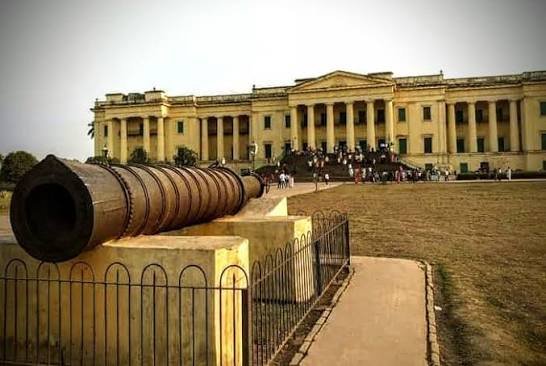
Jahankosha Cannon, Murshidabad
Distance
92 KM
from Tarapith
How to Reach
Private Car, Toto from Lalbagh
About this Place
The Jahankosha — 'Destroyer of the World' — is a colossal cannon lying at Topekhana near Katra Masjid, at the eastern edge of old Murshidabad city. It is one of the largest surviving medieval cannons in India and a marvel of 17th-century Bengal metallurgy.
The cannon was cast in 1637 CE (during the reign of Mughal Emperor Shah Jahan) at Jahangirnagar — present-day Dhaka — by the master craftsman Janardan Karmakar of Dhaka, under the supervision of Sher Muhammad and overseer Hara Ballav Das, during the subahdari of Islam Khan. It was made of ashtadhatu, the sacred alloy of eight metals.
The statistics are staggering: the Jahankosha is about 17.5 feet (5.5 m) long, weighs around 7,000 kg (about 212 maunds), has a circumference of roughly 5 feet, and required about 17 kg of gunpowder for a single shot. It once guarded the Nawabi capital as part of the Topekhana (artillery yard) of the Nawabs of Bengal.
For many years the cannon rested gripped in the roots of a peepul tree that had grown around it — old photographs show it almost swallowed by the tree — until it was freed and mounted on a masonry platform by the Archaeological Survey of India. Seen today beside the ruins of the old artillery ground, the giant gun is a favourite stop on the Murshidabad heritage circuit, usually visited together with the nearby Katra Masjid.
Planning a visit? Book your stay in Tarapith first.
Find Hotels in Tarapith