
← Back to Sightseeing
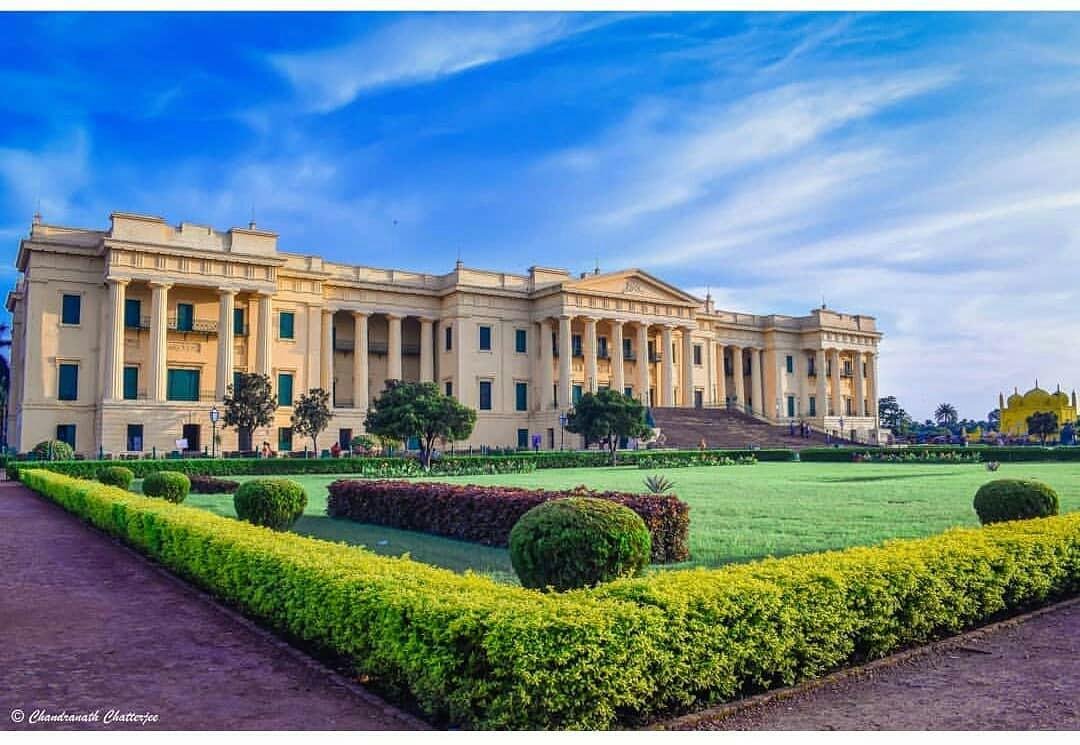
Hazarduari Palace & Museum, Murshidabad
Distance
95 KM
from Tarapith
How to Reach
Private Car, Bus, Train
About this Place
The Hazarduari Palace — the 'Palace of a Thousand Doors' — is the grandest monument of Murshidabad and one of the finest heritage buildings in eastern India. It was built between 1829 and 1837 by architect Duncan McLeod of the Bengal Corps of Engineers for Nawab Nazim Humayun Jah, on the banks of the Bhagirathi river.
The three-storeyed palace, built in Indo-European (Italianate) style, has exactly 1,000 doors — but only 900 are real. The remaining 100 are false doors, cleverly built to confuse intruders and assassins: anyone fleeing through a false door could be immediately caught by the Nawab's guards.
Today the palace is a museum under the Archaeological Survey of India, housing about 20 galleries with over 4,000 exhibits — the Nawabs' armoury (including the sword of Siraj-ud-Daulah and the dagger with which Mohammad-i-Beg killed him), vintage oil paintings, Dutch and French chandeliers, marble statues, palanquins, rare manuscripts, the silver throne of the Nawabs, and the famous mirrors positioned so the Nawab could see everyone in the durbar hall while remaining unseen himself.
In the same vast campus stand the Nizamat Imambara, the Madina Mosque, the Clock Tower and the Bacchawali Tope — a huge cannon made between the 12th and 14th centuries, which was fired only once; the explosion was so violent that it is said expecting mothers in the city delivered from the shock, giving the cannon its name. The palace grounds beside the river are especially beautiful at sunset.
Planning a visit? Book your stay in Tarapith first.
Find Hotels in Tarapith